
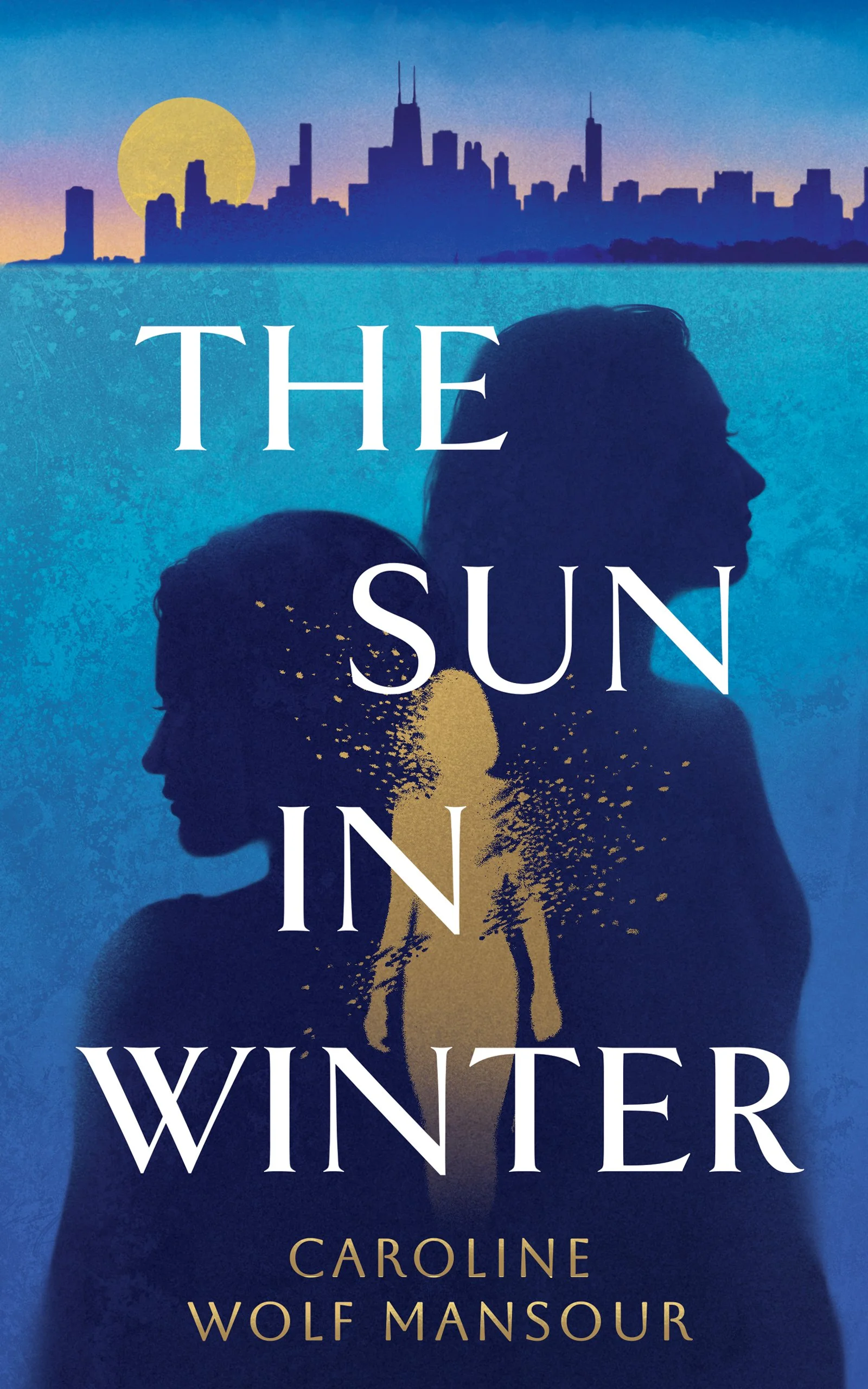
Contemporary women’s fiction
The Sun in Winter
by Caroline Wolf Mansour
Rachel Crane has it all: loving parents, family wealth, and a younger sister, Isabel, whom she adores—until one night in Paris changes everything.
When a nightclub shooting leaves Isabel permanently injured, Rachel is consumed by guilt over her role in the tragedy. Seeking atonement, she abandons her own ambitions to live out Isabel’s, starting over in Chicago as a therapist.
But when her fierce and complicated new client, Hailey Reynolds, begins to challenge her, Rachel is forced to confront the past she’s spent years trying to outrun. As the two women’s lives intertwine, Rachel is drawn out of isolation—only to face another loss that threatens to unravel everything she’s rebuilt.
Laced with humor, heartbreak, and the messy beauty of healing, The Sun in Winter is a story of guilt, forgiveness, and the courage it takes to begin again.
ISBN(s):
978-1-963077-06-3
978-1-963077-05-6
978-1-963077-07-0
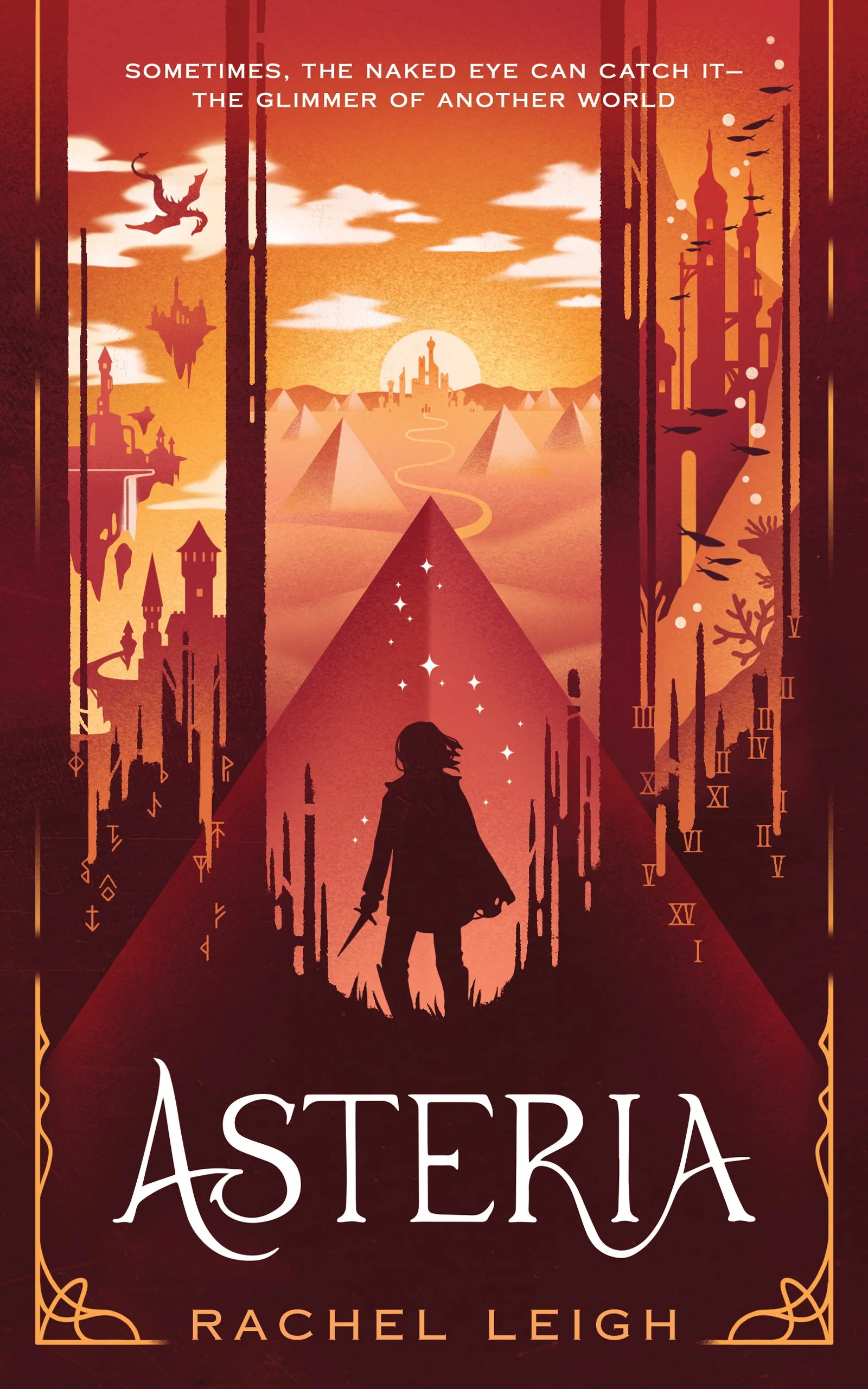
Puzzle-box fantasy
Asteria
by Rachel Leigh
Asteria is dying. Its kingdoms are fractured, its people warring, its magic faltering—and anyone who could save it has vanished.
On Earth, Conor will do whatever it takes to keep her head down and her sister alive. She’s a shadow in her own life—until the night her classmate Jaime drags her into the woods and through a rift between worlds.
Trapped in the mysterious realm of Asteria, Conor has no choice but to flee with him through dark forests and even darker tunnels. As they race to evade prowling fexes and sentinels, she searches for something—anything—that could get her home.
She’s not the only one desperate to escape. In the sea’s shadowy depths, a thief and an assassin hunt for answers that might save their doomed city. Atop floating towers, a reluctant queen uncovers ancient secrets. As storms rise and dragons stir, she longs only to disappear. Across the wintry meadows below, an exiled heir fights to outwit an unsettling captor—all while plotting to reclaim her stolen throne.
Their paths are converging.
Something in Asteria is waking.
And nothing will ever be the same.
ISBN 978-1-963077-00-1

Memoir-novel
In the End: A Memoir about Faith and a Novel about Doubt
“May we all be so courageous in questioning our understanding of the world—and may we do so with such compassion for ourselves and others. Truly lovely.”
— Kate Cohen
Washington Post columnist and editor of We of Little Faith
Part memoir, part novel, In the End offers a kaleidoscopic portrait of God as seen through the eyes of a child.
Christianity was the author’s birthright: she is the daughter of a pastor, granddaughter of missionaries, and so on for generations. In her earliest memories, God feels like a member of the family, bearing a promise of eternal life in heaven. But as she ventures beyond the parsonage, the world complicates those simple beliefs.
The God of her understanding evolves from father figure to invisible friend to painfully unrequited love—and when she attempts to fortify her faith through study, doubts only multiply. The greatest doubt of all eventually consumes her young mind: one day we will die, and what then?
In an ambitious quest to understand both her own childhood and the nature of all existence, Karie Luidens employs a mind-bending blend of genres, with evocative prose slipping from fact to fiction in pursuit of truth. Her story wends from village life to the streets of Paris, reviving long-dead philosophers for urgent conversations along the way. Themes of gender, sexuality, embodiment, and naive white saviorism ripple beneath the surface throughout.
In the End combines the intellectual rigor of the philosophical novel Sophie’s World with the poignancy of the fictionalized memoir Blankets. Ultimately, by interrogating her Christian heritage and confronting the specter of mortality, Luidens realizes a vision that is entirely her own.

Literary fiction
Like Glass
by Sylvia Wilde
She’s just another jaded urbanite, working herself to death by day and staring into a glass of vodka by night. It’s fine. Who needs home or family? Not Trey—not after her entire hometown shunned her as a sinner.
And sure, love is what drew everyone’s condemnation in the first place; love is what drove Trey to abandon her siblings with their angry father and leave her glaring church community in the dust. But that doesn’t mean she expects to find love now, right?
From the Midwest to Manhattan, the gleaming high-rise office to the seedy corner bar, Trey keeps her head down and keeps moving. She isn’t sure how far she’ll need to go to outrun her demons, or how many friendships she’ll make and then sabotage along the way. All she knows is she can’t slow down or look back, not when all it takes is a phone call to catch her off guard, the shards of her broken past slicing back into the present.
Like Glass is a cutting depiction of religious bigotry and the scars it leaves throughout one young queer woman’s life. And yet, along her journey, Trey’s voice is as sensitive as it is cynical, belying the grain of hope that she still holds in spite of it all.
“As she struggles to move beyond a fractured past, Trey isn't sure about people. Or love. This story unravels the secrets of her life, immersing a reader in the echoes of heartbreak and proving that while hope may falter, the human spirit finds a way—but it might not look like what we expect.”
— Sylvia